
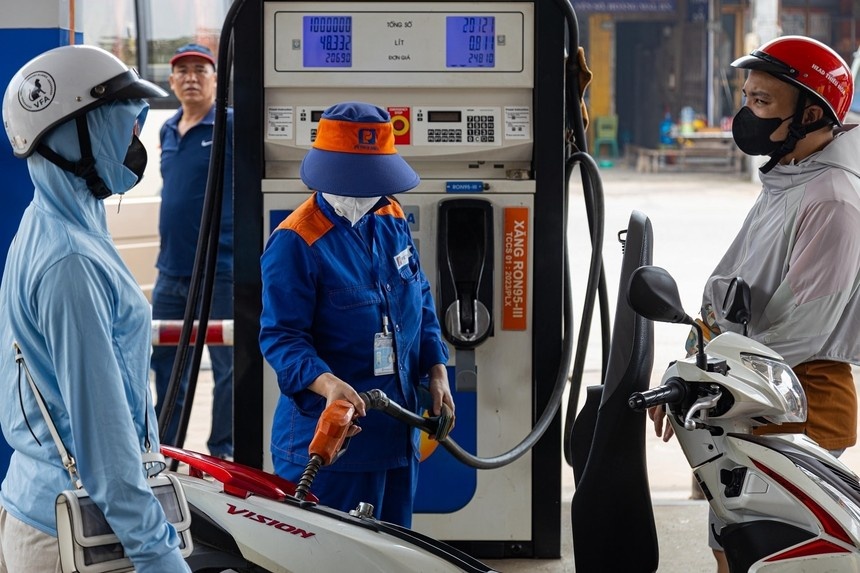
According to data by Vietnam Customs, Vietnam spent over $2.9 billion importing 3.4 million tonnes of petroleum products in the first three months of this year, soaring 79 per cent and 45 per cent, respectively, from a year ago. In March, the country imported nearly 1.2 million tonnes of petroleum products totalling $1.46 billion, representing a 13 per cent on-month increase in volume and a surge of 94 per cent in value due to skyrocketing prices in the global market.
In the first quarter of 2026, crude oil imports saw a 15 per cent decrease against last year’s period, reaching more than 3.1 million tonnes, worth nearly $1.7 billion.
The share increase in import value is attributed to the rising global oil prices amid the escalation of the Middle East conflict. Businesses have stepped up imports and source diversification to avoid domestic fuel shortages.
In March, key businesses and import traders purchased approximately 3.2 million cubic metres of petroleum products. This, coupled with existing inventories, helps ensure the supply until the end of April.
The Ministry of Industry and Trade is building plans for the upcoming months. Some measures include increasing supply, enhancing domestic production, diversifying sources, developing environmentally friendly alternative fuels such as biofuels, and enhancing commercial reserve capacity.
As reported by Business Insider on April 13, oil prices spiked past $100 per barrel after the US administration imposed a blockade of the Strait of Hormuz in response to failed peace talks between Iran and the US.
Oil prices have skyrocketed globally since the US and Israel’s war on Iran began in February. Iran retaliated by effectively closing traffic through the Strait of Hormuz. Around 20 per cent of the world’s oil supply and liquefied natural gas passes through the waterway off Iran’s coast.
ASEAN countries exposed by Middle East oil dependence
ASEAN countries are vulnerable to supply chain disruptions due to their heavy dependence on crude oil imports from the Middle East.
Nghi Son Refinery secures alternative crude amid Middle East disruptions
Nghi Son Refinery has secured alternative crude supplies to maintain operations amid disruptions to shipments through the Strait of Hormuz.
National Assembly approves zero tax on petrol, oil, aviation fuel
The National Assembly has unanimously approved sweeping tax cuts on petrol, oil and aviation fuel, reducing key rates to zero through June 30 in a bid to cushion domestic markets against volatile global energy prices.
