
1. Positive Reinforcement: Build Confidence First

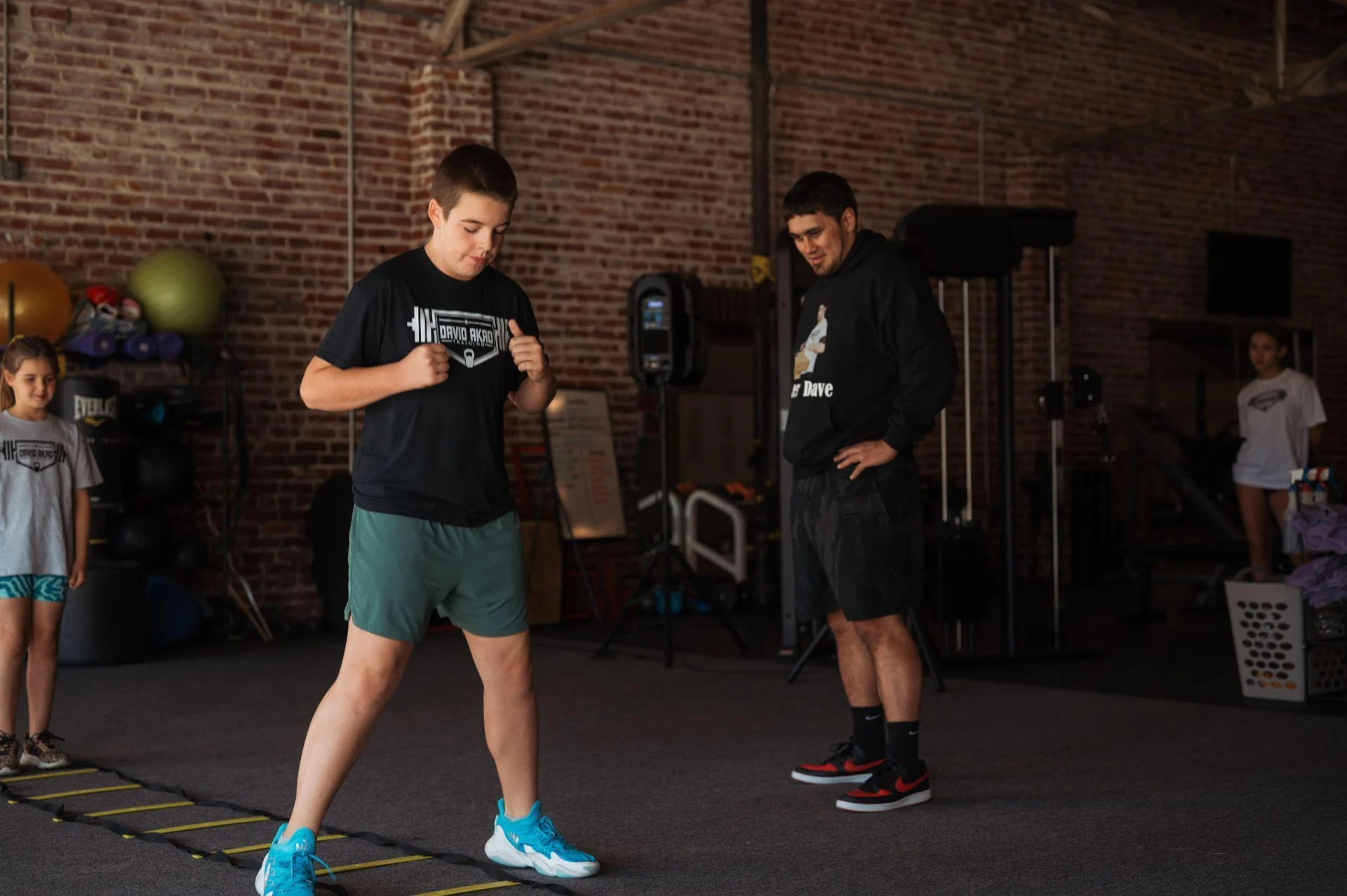
Image: Coaching a youth athlete performing drills on an agility ladder.
Youth athletes thrive on encouragement. The tone you set as a coach can make or break a kid’s confidence in the early stages of their athletic development. Positive reinforcement doesn’t mean sugarcoating everything. It means being intentional about catching athletes doing things right and letting them know you see it. When a young athlete hears “great job” or “love the energy you’re bringing,” they’re not just hearing praise, they’re hearing belief.
This doesn’t mean avoiding correction or hard coaching. It means your delivery matters. Telling a 10-year-old “you’re not doing well” or “you need to work harder” doesn’t teach – it discourages. Instead, use encouragement as the foundation, and layer feedback on top. “That was a good rep. Now let’s fix this part” is far more productive than “that was wrong.”
Confidence is a fragile thing at a young age. Kids want to know their effort matters. Positive reinforcement builds a sense of safety and motivation, which leads to consistency. And consistency, not intensity, is what drives long-term results.
2. Start Structured Strength Training Early
One of the biggest myths in youth development is that strength training is “dangerous” for kids. The truth is, properly structured strength training is one of the best things you can do for young athletes. It teaches them how to move their body, develops coordination, and lays the groundwork for athleticism down the road. The key is to start simple and focus on body control, not loading up barbells right away.
When I work with youth athletes, we emphasize movements like bear crawls, sled pushes, med ball throws, sprints, and jumps. These are fun, safe, and teach fundamental movement patterns. The goal isn’t to chase numbers, it’s to master form and learn how to move efficiently. The earlier kids learn those patterns, the easier it is to progress safely later on.
On the other hand, skipping foundational movement work and rushing into heavy lifting is a recipe for bad habits and burnout. Overloading too early doesn’t build toughness, it builds dysfunction. By focusing on structured, age-appropriate training, you’re developing coordination, stability, and confidence that will last throughout their athletic career.
3. Pour Into Them

Image: Showing up for youth athletes games can show them just how much you care about them beyond just being a client.
As a youth coach, you’re not just teaching movement, you’re shaping identity. Many kids look at their coach as more than a trainer; they see you as a role model or even a superhero. How you speak, how you carry yourself, and how you treat them will stick with them long after the sets and reps are over.
Pouring into your athletes means showing them you care beyond performance. Ask about their day, show up to their games, and celebrate their effort even when the result isn’t perfect. Kids can tell when you’re invested versus when you’re just going through the motions. It’s not about being their friend, it’s about being a consistent, trustworthy adult in their corner.
When young athletes feel seen and supported, their effort and engagement skyrocket. They buy in not because they have to, but because they want to. That connection creates an environment where kids are willing to listen, learn, and push themselves because they know the person coaching them genuinely believes in them.
When young athletes feel seen and supported, their effort and engagement skyrocket, says @trayner_dave
Share on X
4. Practice Patience

Image: Coaching youth athletes requires commanding the floor and maintaining their attention.
Training youth athletes requires patience and lots of it. They’ll lose focus, forget cues, and sometimes look like they’ve never done a drill before, even after weeks of repetition. But that’s part of the process. Their brains and bodies are still learning how to coordinate complex movements. As a coach, your ability to stay composed and encouraging during those moments is what keeps them coming back.
Expecting perfection from a young athlete is setting them up for failure. Instead, focus on progress over performance. Celebrate the small wins like cleaner form, better balance, or simply improved effort. Patience means understanding that each kid develops at their own pace, and your role is to guide that development without rushing it.
Youth training isn’t a sprint; it’s a marathon. The best youth coaches aren’t the ones who get short-term results, they’re the ones whose athletes come back year after year because they built trust, confidence, and a love for training that lasts.
5. Make It Fun

Image: Turning training into a game is a great way to get buy-in, effort, and fun out of your training.
If you want kids to fall in love with training, you have to make it fun. Youth athletes don’t need every session to feel like a bootcamp. They need to associate movement with joy. When they’re laughing, competing, and moving freely, they’re not just getting better. They’re learning to enjoy the process.
Games are your best tool here. Incorporate obstacle courses, relay races, flag football, tag variations, and team challenges. When competition feels friendly, effort skyrockets. You’ll often get better quality work during a “game” than you would during structured drills because the kids forget they’re training and feel like they’re just playing hard.
The trick is to disguise training as play. Fun doesn’t mean chaos. It means creating an environment where effort is natural. When a kid leaves saying, “That was so fun,” you’ve done your job. That’s what builds long-term consistency and makes them want to come back.
The trick is to disguise training as play. Fun doesn’t mean chaos. It means creating an environment where effort is natural, says @trayner_dave
Share on X
6. Build Trust With Parents
When you train youth athletes, you’re not just working with the kid. You’re building a relationship with the family. Parents are trusting you with their child’s physical and emotional well-being. Earning that trust takes consistent communication, transparency, and professionalism.
It’s easy to assume parents will just “see the results,” but the reality is they appreciate being kept in the loop. Send a quick text or video update showing progress, or simply tell them after a session, “Your son’s balance has really improved this week.” These small touches go a long way. They show that you’re not just running workouts, but rather that you’re invested in their child’s growth.
When parents trust you, they become your biggest advocates. They’ll spread the word, bring in referrals, and support your programs long-term. Communication builds credibility, and credibility keeps your gym full.
7. Show Them How It’s Done

Image: Youth athlete performing drills on an agility ladder
Kids learn visually. You can tell them what to do all day, but when you show them, it clicks. Demonstrating exercises also earns respect. It shows them that you can still move, sprint, or jump and can walk the walk, not just talk the talk. It’s one thing to coach from the sidelines; it’s another to step in and lead by example.
When I demonstrate, I’m not trying to show off. I’m showing that I believe in the work enough to do it myself. It’s powerful for a young athlete to see their coach sweating, competing, and having fun alongside them. It creates connection and credibility.
A coach who leads from the front doesn’t have to yell to get effort from the athletes. The example speaks louder than any cue. When kids see that you live what you teach, they follow with buy-in and belief.
8. Safety First
Finally, safety has to be the foundation of everything you do. It’s easy to get caught up in energy and intensity, but with youth athletes, safety always comes first. That means setting up your environment properly, inspecting equipment, and ensuring technique before speed or load.
Think like a lawyer and anticipate risks before they happen. Have waivers in place, keep the space clear, and always prioritize supervision. A single accident can undo months of progress and trust, so take the extra time to do it right.
A safe environment doesn’t just prevent injuries, it builds peace of mind. Parents notice when you run a clean, organized session, and kids feel more confident when they know you’re looking out for them. Safety isn’t the boring part of coaching. It’s what allows everything else to thrive.
A safe environment doesn’t just prevent injuries, it builds peace of mind. Parents notice when you run a clean, organized session, and kids feel more confident when they know you’re looking out for them, says @trayner_dave
Share on X
Final Thoughts

Image: One of the most valuable things a coach can do is to build trust and establish a relationship with youth athletes to set them up for a career of success.
Training youth athletes is one of the most rewarding experiences in coaching. You’re not just developing athletes, you’re developing people. The lessons they learn in your gym like confidence, work ethic, and perseverance all will carry far beyond sports.
Every coach can teach sets and reps. The great ones teach life through training.
The post 8 Essential Tips for Training Youth Athletes appeared first on SimpliFaster.
